Tuesday, 16 April 2019

Cooking Tip: Learn how to use a Chef's Knife!!!

Cooking Tip: Learn how to use a Chef's Knife!!!


You may ask "why is she asking me to do thisπŸ’ ?" Well, if you want to be quick in the kitchen, then this tip is for you. I like to reduce my prep time as much as I can since this will impact how long I take to prepare a meal from start to finish. My advice is to learn how to use a chef's knife!!! This is proven to reduce your prep time, however, it's not just about getting the "big-guns" knife; it's also about using it the right way, with the correct cutting technique and also making sure you don't cut yourself while you're at it πŸ˜‚πŸ˜‚.  You have to practice in order to get this right, but trust me, it will become your lifesaver in the kitchen.

I started using my first chef's knife after I got married since someone gave me one as a wedding present. It has worked amazingly well, until my brother bought a new set. And that knife has been by best friend in the kitchen ever since.

My Actual Knives that are in use. I have graduated from the First one to the Global one,
whilst my husband continues to use the First one. 

So let's say you have gotten your knife but somehow you just can't get the hang of it. Well have no fear, because the good old mini choppers and food processors are here πŸ˜‰πŸ˜‰. This is the next best thing to use. Personally, I  choose to use my knife because I hate increasing the amount of wares that I have to wash 😁.


Thursday, 11 April 2019

About Anita: How did I get into Cooking and Baking

How did I get into Cooking and Baking


My Brother, Neel and I

Ok...So to answer this question, I need to go back many many years ago to when I was about 12 or 13 years old. At this point, my mom had me making different things in the kitchen with her; cutting up vegetables for fried rice, making roti with her for Divali and so on. My mom believed that everyone needs to know how to cook, that's why she taught both my brother and I to cook at an early age. Believe it or not, but my brother, Neel, can cook and bake just like I do. And he is more adventurous than I am as well. I remember when he visited us in 2017, he made a Trifle. YES....a trifle. And it was soooooo delicious! I already told him that he has to make another when he visits again....lol

 Trifle made by my brother when he visited from Australia


Memory Lane: Another time when I was learning
to cook, I decided to surprise my mom and family by
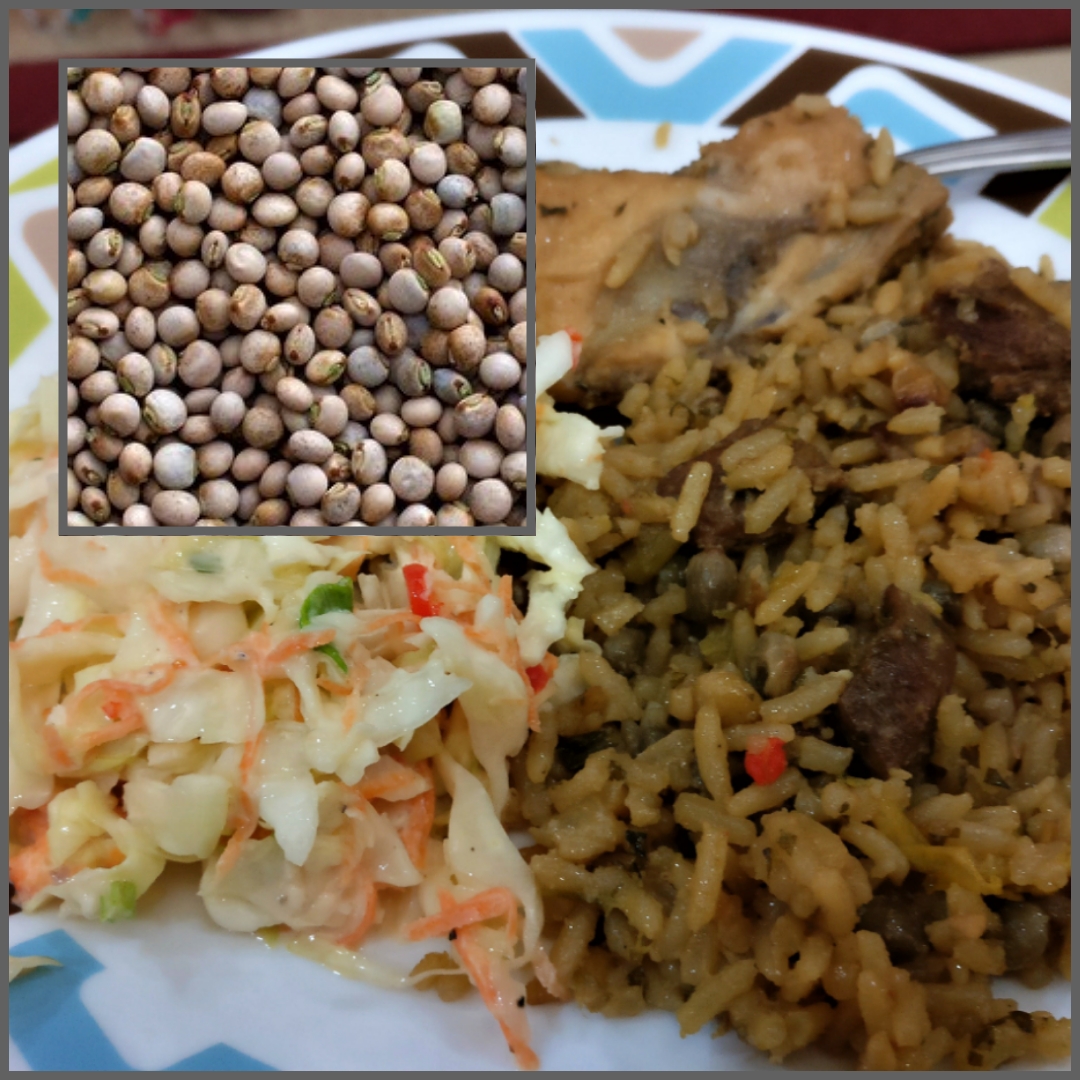
making pelau, using dried peas. Well I never knew
that the  peas needed to be soaked and half cooked
before  using it in pelau. So the rice ended up coming

out very soggy since the peas needed more time to 
cook. The feedback I got from my family though 
was that it tasted really good!
Pic above shows Dried Pigeon Peas and Pelau.
So back to me. One day, my dad brought home some books he got from a coworker. I, being the bookworm that I am, went through the books and found one that was about Cooking Techniques, and the science being them. This sparked my interest for sure. I cannot remember the name of the book, but I remember the contents. It detailed techniques such as braising, broiling, poaching and many others. It also had recipes to try. So I started trying them; poached eggs, lemon meringue pie, pie crust, pancakes. And during my trials, mistakes happened for sure. I mean how can you be learning if you do not make mistakes? That's an essential aspect of learning!! One of the first things I tried was pancakes. I ended up making about 30 pancakes with that recipe πŸ˜†πŸ˜†. Next was Lemon meringue pie whose recipe called for corn starch. Remember this was many many years ago when we did not have internet at our fingertips or a variety of items in the grocery as we do today. So I went to the next best thing; My Mother. She said well, I think that's the same as cornmeal πŸ’. So that's what I used. It tasted delicious, but it did not set. Of course years after I found out why...cornstarch and cornmeal are very very different!! πŸ˜…πŸ˜…. 

Learning Time: Difference between Cornstarch and Cornmeal
Both cornstarch and cornmeal comes from corn. Cornstarch is derived from the endosperm of the corn and is used as a thickening agent which has more thickening power than plain flour. Cornmeal on the other hand, is dried corn that has been coarsely ground. It has more of a corn flavour and is does not have any thickening properties. Both look very different, in that cornstarch is powdery and white, while cornmeal is usually grainy and yellow. 

Husband currying some
common fowl.
So as the years went by, I continued to try different things until they were eventually successful. I was very thankful that my mom taught me to cook since this is a very beneficial trait to have for yourself and your family, AND it's not just for women! When my brother and I were in UWI, we relied ALOT on our cooking skills to get by each day since we did not have money at our fingertips to buy food everyday. 

After getting married, I made an effort to teach my husband to cook as well -he had ZERO experience in this field at the time and now he can cook the main things just like I do. He is of course not as adventurous and prefers to stay within familiar territory. I am appreciative of this since I may not be able to cook everyday and he needs to step in when necessary.

Another reason why I like cooking my own things is also because it is a healthier choice since you might not know every ingredient that goes into some food you may buy. I also love making things from scratch when it come to baking. Nothing is wrong with the box cakes, brownies and cookies; I have used them in the past and it can be a very good alternative for those who don't like to spend much time in the kitchen. But I like to challenge myself and the next step for me was to do it from scratch! Don't get me wrong though, we do love eating out and trying new restaurants. That's actually one of our family hobbies when we can get the time to fit it in.
Us! Heading out to have an early dinner at Krave for
Christmas.  One of our favourite places. 
My daughter displaying her knife
set that I got her as an Easter present.
She loves this set so much! 

In my everyday life, I have my 5 year older daughter helping me out in the kitchen by measuring things when I'm baking and cutting up seasonings when I'm cooking. I bought her her very own kid-friendly knife set which she loves sooo much! I have started including my 15 month old now as well, where she helps with the mixing, and she is extremely intrigued with my Kitchen Aid. She will run to the kitchen whenever she hears it come on and wants to be involved immediately.


So my journey started many years ago where I would try new techniques and recipes, and has evolved to the present where I create my own recipes that work for me and my family. They are the ones I cook for the most and hence their feedback and approval is vital. After all, my biggest critic is my husband πŸ˜‚.


Friday, 5 April 2019

Approved Recipe: Curry Duck

How to make Curry Duck 


Trinidadian curry is very unique and different as compared to other places. We also tend to curry various meats and vegetables that others wouldn't even think of currying. In Trinidad, everyone develops their own method of currying either by trial and error or by what was handed down to them from their ancestors. Over my years of currying, I too have developed my own method of currying which is what I am sharing with you here. You can adjust it any way you like, since currying is versatile.


Curry duck on a bed of Dhal and Rice with a nice piece of green pepper. We
like our pepper, especially the raw green ones when we eat our curry.

The curry Queen- My MOM
I developed my unique method of currying from my Mother, who is the curry QUEEN. This is one thing she can do exceptionally well; she can curry anything and it will taste extremely good! I remember when I began learning to cook curry; I was a teenager and I would always tell my mom that I need specific measurements since her method would include eye-balling everything. After years of trialing and cooking, guess what, my method has now graduated to eye-balling πŸ™ˆπŸ™ˆ. During my years of training, my mom specified 2 main words that are used for this process. These words may have been handed down by her grandparents who came to Trinidad on the last ship from India, who knows πŸ’? They are "chounkay" and "boojay," which I spelt the way it is pronounced. You can review my definitions below πŸ‘€:

Define: Chounkay
Verb, ch-oun-kay, ch-oun-kay-ing.  Use in a senstence: "Time to chounkay the chicken or duck." A method of cooking whereby you heat oil in a pot and add a required amount of curry masala which is then allowed to fry until it looks grainy. At this point, the meat or vegetables will then be added and coated with the curry and permitted to cook. 

 Define: Boojay
Verb, boo-jay, boo-jay-ing.   Use in a sentence: " The duck has to boojay properly!"
A technique of cooking meat which develops a rich flavour. After the meat has started cooking in a pot, it springs a certain amount of liquid. After this liquid has dried up, reduce the heat to low, and keep turning the meat at 5 minute intervals, and scraping up anything that becomes stuck to the pot. Continue this technique for about 15-20 minutes before adding water to deglaze the pot to continue cooking.

These 2 terminologies will be used in my recipe below so please familiarize with them as soon as possible! In my recipe, I have also tried to give as much measurements as possible. I usually do all my seasonings together, and sometimes take out a little bhandania, garlic and onion for the chounkay-ing part. I don't do this all the time, but when I'm feeling a little adventurous then I do, so, by all means, go ahead or feel free to omit and just add all to the duck! One thing to note is that I only included the most significant seasonings here for currying any meat. These seasonings are essential no matter what you are currying, so do not exclude any of these. However, you can add any other seasonings that you have a liking for; sometimes I add chives/celery/thyme/Spanish thyme.  The critical things here are the key ingredients I listed, and the technique of boojay-ing. This is where the real flavours erupt. 

 Ingredients:

Cook's Tip: I crush my garlic using a Lorha.
Crushing garlic, instead of chopping releases
more enzymes which gives a stronger garlic
flavor. The Lorha and Sil , passed down by 

our East Indian ancestors,  are utensils made of
stone and is used to grind seasonings and spices.
For the Duck
  • 1 7-8 pound duck, cut into bite-sized pieces.
  • 6 tablespoons duck and goat curry, I use the Chief Brand. If you do not have this then use same amount of curry masala mixed with 1 tsp anchar masala. 
  • 1 medium onion, chopped (save 1 tablespoon).
  • 3 tablespoons minced garlic,  I use 1 head of garlic (save 1 tablespoon).
  • 2 cups coarsely chopped bhandania/shadow beni/culantro. If you are finely chopping it in a mini chopper, then use 1 cup. (save 1 tablespoon).
  • 4 medium-sized pimentoes, chopped.
  • 2 tablespoons salt. 
  • 1 tablespoon roasted ground geera/cumin.
  • 1 Scotch bonnet pepper. If you like it HOT like I do, then use 3 peppers. 
  • 6 tablespoons coconut milk powder, Maggi brand by Nestle or any other brand will work.
  • Water.

For the chounkay-ing:
  • 4 tbsp olive oil. You can use whichever oil you prefer.
  • 1 tablespoon each of garlic, onion and bhandhania (saved from the above ingredients list).
  • 4 tablespoons curry powder, I use the Chief brand.
  • 1 teaspoon anchar masala, I use the Chief Brand.
  • 1 teaspoon whole geera/cumin.
  • 20 methee/methi/fenugreek seeds.
  • 1/4 cup water.

Method: 

    Seasoned duck!
  • Wash and clean the duck meat according to your liking. I usually remove any thick fat and feather remnants but leave most of the skin on since this leads to a richer flavour in your curry sauce. In Trinidad, everyone prefers to have their duck cleaned a certain way, so by all means, do what you are accustomed to. Season the duck with the garlic, onion, bhandania, pimentoes, curry, ground geera, salt, and scotch bonnet pepper. Oh! And don't forget to save the 1 tablespoon each of the garlic, onion and bhandania.


Seasoning the Duck. Clockwise from top- bhandania, pimentoes, curry, geera,
onions, garlic and salt in the center. 

    Spices and seasonings needed to chounkay the duck
    Red arrow- whole geera.
    Blue arrow- Methee/Fenugreek seeds

  • Ok time to chounkay the duck!! Firstly place the curry, anchar masala, remaining garlic, onion and bhandania in a bowl and set aside. I cooked my duck on a chulha using firewood, but for this recipe, let's use the stove. Place the pot on the stove, add the oil and allow to heat up. When hot, add the methee seeds; allow to darken to a rich brown colour. Do not let it get black! If this happens you need to discard the oil and start over since this results in a very bitter, unpleasant taste. I had to learn this the hard way! Once the seeds have darkened, add the whole geera. These should start popping and smell fragrant. when they look golden brown, add the mixture of curry to the oil together with the 1/4 cup water and stir constantly; add a little more water if you prefer. Keep stirring until the mixture looks grainy. Add the seasoned duck and keep turning until it is coated. Add the coconut milk powder and continue mixing. Cover the pot and allow water to render.  If you do not like coconut milk in your duck, then you need to try it this way, and I promise you that you will love it. People who tasted my duck have described it as "tasting sweet and nice!" Well, this is the reason why πŸ˜„πŸ˜„.
  • Keep turning the duck at 10-minute intervals. When the water has dried up,  put the flame on low. Continue turning the duck every 5-10 minutes - this is the start of the boojaying step.  You want it to start sticking; whenever it starts sticking, you have to turn it while scraping up all the good stuff that gets stuck onto the pot. Keep doing this for about 30 mins or when it starts to stick to the bottom of the pot in such a way that you are hearing a sizzling or frying sound and need to apply more strength to scrape the bottom of the pot. At this point,  it is ready for more water to be added. Also take note of the smell - this is usually what I use to know when the boojaying process has completed. This is where the most unique and intense flavour of the duck develops. You cannot skip this step if you do then your duck will not have that extra oomph! This step is what will distinguish your duck from most other people's. 
  • Add enough water to cover all the meat. Put the heat on medium and let this simmer until the sauce has thickened and has become about half of what it was or even less, depending on how you like your sauce. My husband likes plenty sauce, my mom likes a very little and I am somewhere in between. Remember to taste for salt and adjust as you like; my guess is that you may need to add some more 😏.

Let me know if you have any comments or questions and I will be glad to help. Just remember, everyone has their own way of currying; this is just one way and can be adapted however you like. Oh and check out my final definition in this blog below 😁.

Define: Chulha
Noun, ch-ul-ha
A traditional Indian cooking stove which uses firewood for cooking. It is shaped like a "U" and is made out of mud or clay.  

As I mentioned before, I cooked my duck on a Chulha. The flavour you get in a chulha is indescribable; once you start cooking on one, you will never want to stop! My mom made this chulha for us to use whenever we feel like eating some fireside food, provided that we have firewood of course! My husband is usually the one manning the fire and making sure it is at its optimum level πŸ˜‰.

Tuesday, 26 March 2019

Cooking Tip: How to keep Ginger!!

Cooking Tip: How to keep Ginger!!

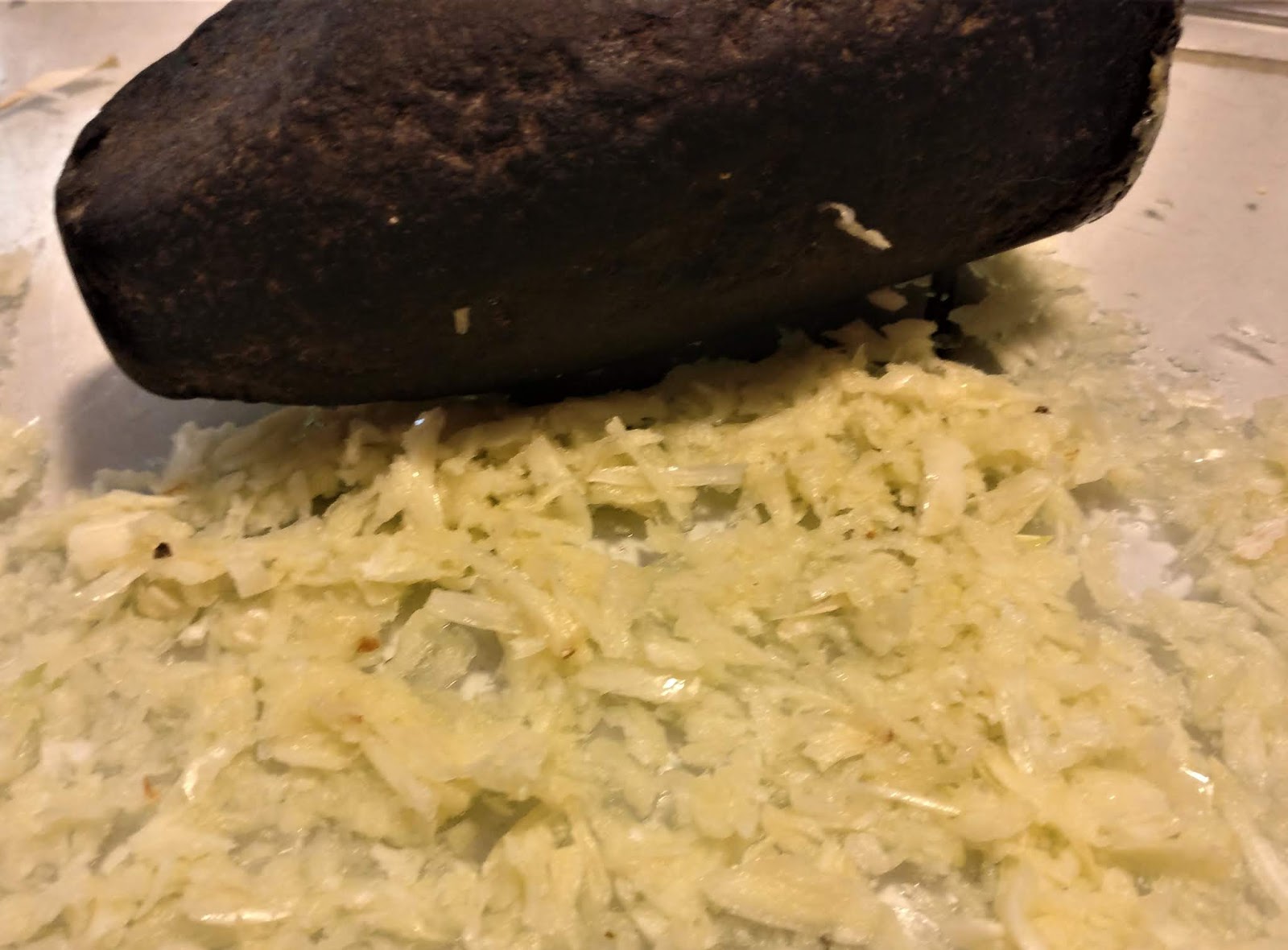
I like to scrub my ginger pieces with the skin on, toss them in a ziplock bag and place in the freezer.  When they are needed to be used, allow to thaw for about 5 minutes and grate on the fine side of a grater. It comes out looking like snow, or like the frost from those older refrigerators.

Who am I ??

Anita's Circadian? What does that mean πŸ‘€?


I am Anita and the purpose of this blog is to look into my day-to-day life, routine or "circadian" Get it?!!


ME!!
So I decided to start this blog because so many people ask me " How do you do it?!!, " "Where do you get the time to work, cook, take care of kids and the family?"  " Can you share that recipe with me?" That's just to name a few! So the purpose of this is to answer some of these questions and share some of my tried recipes that my family loves. 

The Engineer "HAT"
I am a chemical and process engineer by profession, who happens to love being my family's personal chef :). My job is demanding, but yet I find the time to cook a decent meal after work (on most days), and I also manage to bake a few things over the weekend.....or at least this is what other people see me doing....lol

I grew up with my mother cooking and baking nonstop for my brother and me, and therefore after I got married, I knew I wanted to do the same for my family. The difference, however, was that she was a nurse who worked fixed shift hours, but I was an engineer on a processing plant who doesn't always know if I will be leaving on time today or not. 

Two of my biggest 4-legged friends
I like to challenge myself to get it done since my passion is to be a homemaker for my wonderful family of my husband, 2 little girls and four 4-legged friends !! It was hard in the beginning, and it is still hard on some days, but there are simple techniques that you can adapt in order to be able to deal with a wonderful family array as mine.
The Wife and Mommy "HAT"